
The Forest of Dean is a landscape of secrets. While thousands of visitors flock to the well-trodden paths of Beechenhurst or the viewpoint at Symonds Yat Rock every weekend, there exists a parallel version of the forest—one defined by silence, ancient industry reclaimed by nature, and wide-open clearings where you can walk for miles without seeing another soul. For the dog owner, these "Hidden Gems" are the true heart of the region. They offer a sanctuary for reactive dogs who need space, a playground for high-energy breeds who want to roam, and a peaceful retreat for owners seeking a deeper connection with the woods.
In this expanded guide, we dive into the locations that don't always make the front of the tourist brochures. These are the spots favored by locals, where the car parks are small, the birdsong is loud, and the tracks tell stories of the Roman miners and Victorian ironworkers who once called these valleys home.
1. Speculation Picnic Site: The Crossroads of Silence
Located just outside the village of Lydbrook, Speculation is one of those places that people drive past every day without realizing what lies just beyond the treeline. It was once the site of a busy colliery, but today, it is one of the most peaceful entry points into the central forest block.
The beauty of Speculation lies in its geography. It sits at a natural plateau, which means the walking here is predominantly flat—a rarity in the often-hilly Forest of Dean. From the car park, a network of wide, gravel-surfaced fire tracks fans out in three directions. For a dog walker, this is gold; the visibility is excellent, allowing you to see other walkers or wildlife from hundreds of yards away.
If you head south from Speculation, you enter a deep section of coniferous forest where the trees stand like soldiers in perfect rows. In the winter, these evergreens provide a thick canopy that keeps the wind at bay, making it a warm, sheltered walk even on the coldest days. If you head west, you’ll find yourself on the trail toward Workplace, an area defined by older, deciduous trees that explode into a riot of orange and gold every autumn. This is a "low-stress" walking zone, perfect for practicing off-lead recall in an environment that feels vast but safe.
2. The Deep Woods of Soudley: Beyond the Ponds
Most visitors to Soudley stop at the famous ponds, take a photo of the reflection, and leave. To find the hidden gem, however, you need to look upward. The tracks that rise out of the Soudley Valley toward Blaize Bailey offer a completely different experience.
As you climb away from the water, the sounds of the road and the crowds vanish instantly. You are entering an area of "Ancient Semi-Natural Woodland." Here, the tracks are narrower and the undergrowth is thicker, filled with ferns and ancient moss-covered stones. This is the ultimate "sniffing" territory. The thermal currents rising from the valley floor carry a complex map of scents—fox, deer, and the damp, rich earth of the forest floor.
The reward for the climb is the Blaize Bailey Viewpoint. Built using stone from a nearby dismantled railway bridge, the viewpoint offers a stunning panorama of the horseshoe bend in the River Severn. While the Rock at Symonds Yat is more famous, Blaize Bailey is often empty. It is a place where you can sit on a bench with your dog, share a sandwich, and look out over three counties in total silence. It is a profound, meditative spot that captures the "wild" spirit of the Dean.
3. Nagshead Nature Reserve: The Birdwatcher’s Secret
Maintained by the RSPB, Nagshead near Parkend is famous for its flycatchers and deer, but it is also an exceptional, quiet spot for a disciplined dog walk. Because it is a nature reserve, there is a distinct atmosphere of respect and quiet here that you don't find at the larger visitor hubs.
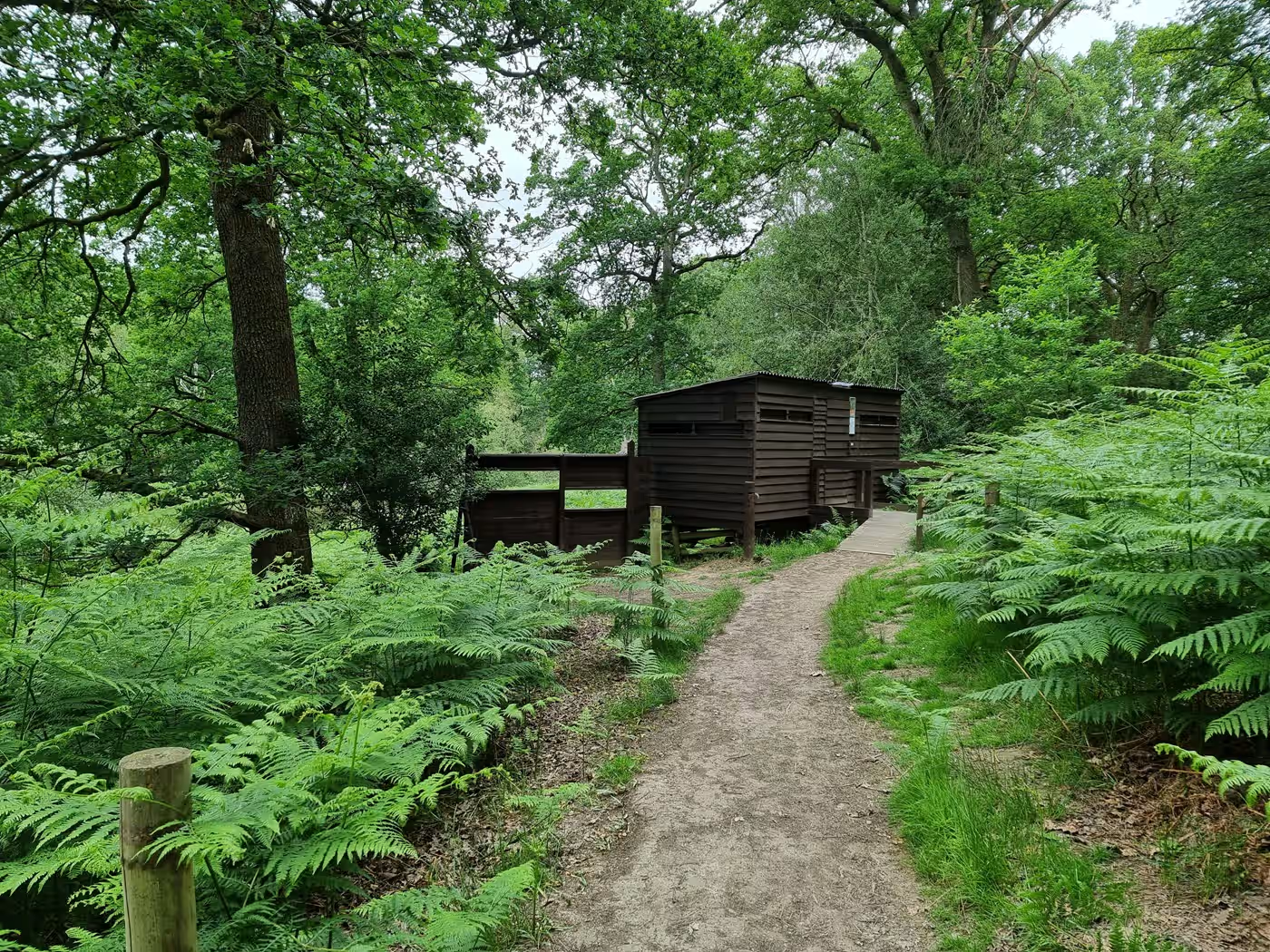
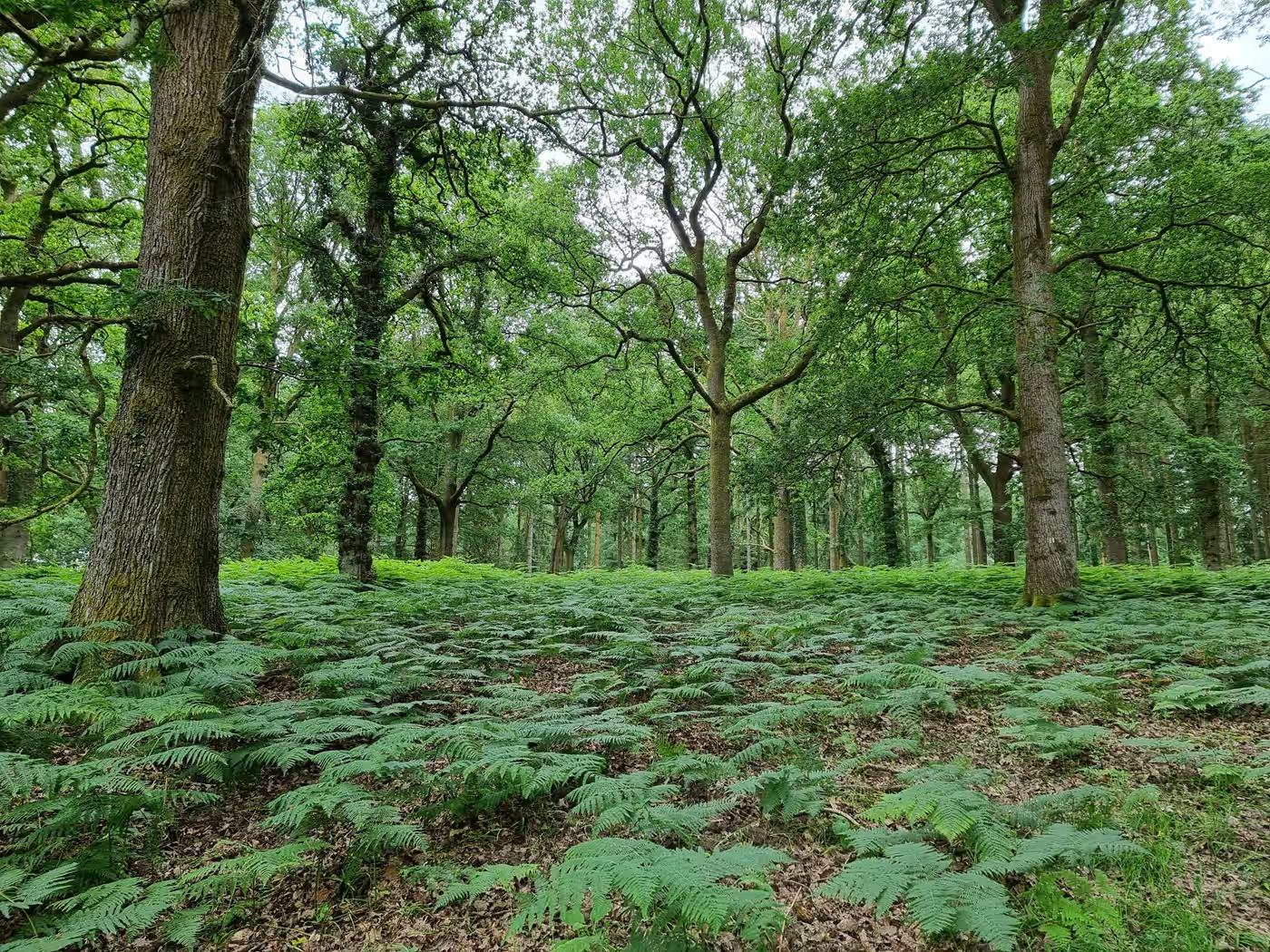
The "Long Trail" at Nagshead takes you through some of the oldest oak trees in the forest. These oaks were originally planted to provide timber for the Royal Navy’s warships, but today they provide a habitat for a dizzying array of life. For your dog, the sensory input here is intense. The sheer volume of birdlife and small mammals means their nose will be working overtime.
Walking through Nagshead feels like stepping back in time. The paths are carpeted in soft pine needles and leaf litter, making it easy on the paws of older dogs. There are several "hides" along the route where you can stop; while the dogs aren't allowed inside the bird hides, the surrounding clearings are perfect for a quiet rest. This is a location for the "slow walker"—someone who wants to appreciate the micro-details of the forest, from the fungi on the logs to the sunlight filtering through the oak leaves.
4. The Wye Valley Greenway: The Tintern Tunnel Experience
One of the newest hidden gems in the region is the Wye Valley Greenway. Following the route of the old Wye Valley Railway, this path connects Sedbury to Tintern. While the Tintern end can get busy, the middle sections near Netherend are remarkably quiet.
The highlight of this route is the Tidenham Tunnel. At over 1km long, it is a spectacular feat of Victorian engineering that is now open to walkers. It is lit during the day (to protect the resident bats), and walking through it with your dog is a surreal, "otherworldly" experience. The temperature inside remains constant year-round, offering a cool refuge in the summer and a dry path in the winter.
Once you emerge from the tunnel, the path clings to the side of the limestone cliffs, offering glimpses of the River Wye far below. The engineering required to build this line—cutting through solid rock—is visible everywhere. For dogs, the path is perfect: flat, consistent, and separated from any road traffic. It is a masterclass in how industrial heritage can be repurposed for modern recreation.
5. Darkhill Ironworks: Where History Meets the Wild
Hidden in the woods near Berry Hill lies Darkhill Ironworks. This was once a site of global industrial importance, where Robert Mushet perfected the process of making steel. Today, it is a hauntingly beautiful ruin that nature is slowly reclaiming.
Walking your dog through the ruins of Darkhill is an experience unlike any other in the forest. The stone arches, old furnaces, and tramway embankments are now covered in ivy and ferns. There are no "keep off the grass" signs here; you can wander through the skeletons of the old buildings, allowing your dog to explore the nooks and crannies of the stone walls.
The area surrounding Darkhill is crisscrossed with old tramroad routes. These were the veins of the forest, used to haul iron and coal to the main lines. These routes are now some of the best "hidden" walking tracks. They are level and straight, following the contours of the hills, and they lead you into quiet pockets of woodland that feel completely forgotten by the modern world. It is a place of shadows and history, perfect for a late afternoon walk when the light begins to fade.
6. Moseley Green: The Open Common
While much of the Dean is defined by its enclosed canopy, Moseley Green offers a sense of space. This is an area of "open forest," a legacy of the commoning rights that allow local people to graze their sheep.
The walking here is across open grass and heathland, punctuated by small clusters of birch and hawthorn. It feels more like a moorland than a forest. For a dog, the ability to see for long distances is a huge benefit, especially for those who get nervous in tight, enclosed spaces.
The "Gem" here is the walk toward the old Blackpool Bridge. Here, you can see a remarkably well-preserved section of a "Roman Road." The large stone setts, laid centuries ago, still sit in the forest floor. Walking your dog over stones that were placed by Roman soldiers is a powerful reminder of the layers of history beneath your feet. After your walk, the open space of the Green is the perfect place to sit in the sun and let your dog relax in the long grass.
Local Refuels: The Unpretentious Stops
After exploring these hidden gems, you need a pub that matches the "local" feel of the walks.
The Bilson Inn in Cinderford is the definition of an unpretentious local. You won't find gastro-foam or fancy garnishes here; instead, you'll find a massive welcome for dogs, a roaring fire, and a community atmosphere that is becoming increasingly rare. It is the perfect place to sit with a pint of local ale and chat with foresters who have lived in the Dean for generations.
Alternatively, head to the Rising Sun at Moseley Green. It sits right on the edge of the common land, and it is not uncommon to see sheep peering in through the windows. It is a rugged, honest pub that understands that dog walkers often arrive with muddy boots and tired paws. Their outdoor seating area is one of the best in the forest for soaking up the evening atmosphere.
Hidden Gem Etiquette
To keep these spots special, we recommend following these "Local's Rules":
- Parking: Many of these sites have small car parks. If a lot is full, don't park on the verges—this damages the delicate forest ecosystem. Have a "Plan B" location ready.
- Sheep Awareness: In areas like Moseley Green, sheep are free-roaming. Even if your dog has never chased a sheep before, the sight of a lamb can trigger an instinct. Keep a lead handy at all times.
- Leave No Trace: These quiet spots don't have the frequent bin collections of the main visitor centers. If you pack it in, pack it out—including dog waste.
- Offline Maps: In the deep valleys near Soudley or Darkhill, GPS can be notoriously flaky. Downloading an offline map or carrying a physical OS Map (Explorer OL14) ensures you can always find your way back to the car.
Find a Pub Near Your Walk